
Wood Tar
39,95 € – 164,95 €
39,95 € – 32,99 € / l
incl. VAT plus shipping costs
Delivery time: 2-4 days
Description
Kiln Burned Pine Tar for impregnating raw, weathered or heavily acquired wooden surfaces. Pine tar is heard in half-timbering, wooden cladding, wooden gables, shingled roofs, etc. outdoors as well as in wooden boats.
Risk of spontaneous combustion! Rags/paper soaked in linseed oil can easily catch fire. Store rags and papers soaked in linseed oil in an airtight metal container or immerse them in water.
Wood tar – the oldest wood preservative
Wood tar is undoubtedly the oldest wood preservative on earth. No other product on the market comes anywhere near offering the same protective and restorative properties for timber used outdoors – nor will you find the distinctive appearance and surface finish of wood tar in any other product.
Conifers protect and repair themselves using resin. Terpenes act as the trees’ solvent for the resin: they facilitate its rise through the trunk and accelerate drying once the resin emerges. This reduces moisture absorption, which can otherwise create a breeding ground for harmful organisms.
There are no generally accepted analytical methods for assessing the quality of wood tar. Consequently, tar is primarily assessed on the basis of its external properties: tar burners often apply it to a planed wooden surface to check its colour, consistency and drying properties, and to determine whether the tar is free from water.
Properties
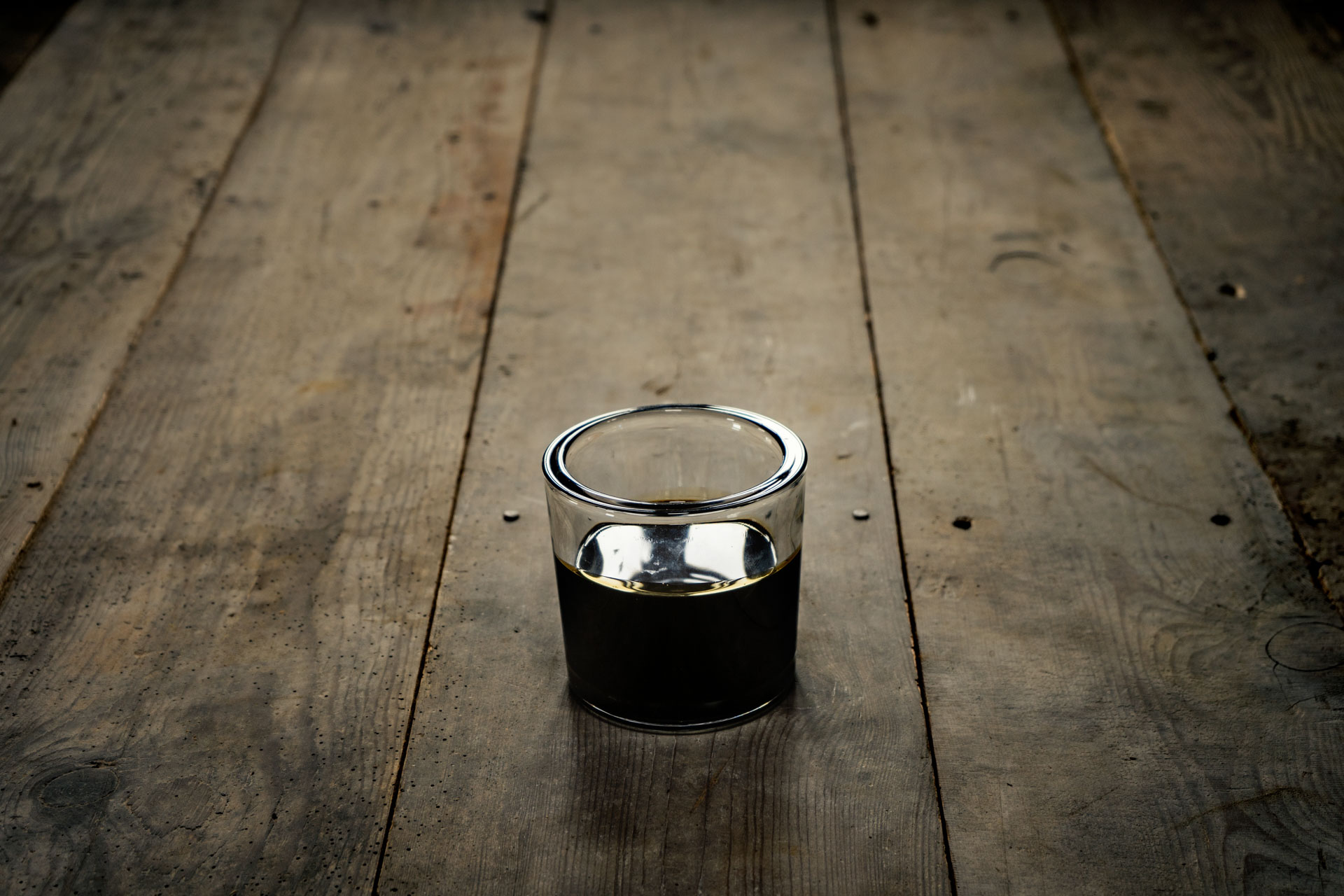
Wood tar is a light brown, viscous product with a very pungent odour. It is vapour-permeable yet water-repellent and is suitable for treating timber surfaces in outdoor areas. Wood tar can be thinned with linseed oil varnish; turpentine is also typically mentioned as a thinner.
Pure wood tar penetrates new, fresh wood only to a very limited extent, but does penetrate, to some extent, old, weathered and leached wooden surfaces. When wood tar is diluted, it is primarily the diluent (linseed oil varnish or turpentine) that penetrates the wood.
As wood tar consists of liquid ‘wood-derived’ components such as resins and oils, its most important property is that it replenishes the wood with lost resin and oil components, thereby effectively regenerating it – these components had been washed out or rotted away through natural weathering. In this way, the wood’s weakened ‘immune system’ is revitalised: the wood regains its original resilience and is protected against aggressive sunlight, leaching by rain and moisture within the wood.
Like linseed oil, wood tar cures with the help of oxygen and UV light. Without UV light, it remains liquid. Curing takes one to two weeks, or longer depending on conditions. This slow curing process gives wood tar its particularly good adhesion: once cured, it remains firm and does not become sticky again even at high temperatures – a phenomenon otherwise only seen in coal tar.
We offer two different grades. The premium-quality fine wood tar is slightly lighter in colour than the classic wood tar. You can clearly see the difference in the product image.
Application
Approximately 2–4 m²/litre is required for the first coat, and approximately 4–8 m²/litre for the second coat. To ensure optimum protection of the wood, it is advisable to leave the container in the sun for a while before use, so that the tar becomes easier to apply. Alternatively, the tar can be thinned with linseed oil varnish – however, the coat should then be reapplied annually.
A surface treated with wood tar has a very long lifespan; when mixed with pigment paste, it lasts even significantly longer than pure or thinned wood tar. Pure or thinned wood tar should be applied annually in three coats for the first five years. Thereafter, a refresher treatment is recommended every five years (three treatments for rough wooden surfaces); the treatment interval is subsequently extended to 10–15 years. South-facing surfaces exposed to strong sunlight require more frequent refresher treatments – otherwise the wood tar will disintegrate into powder over time.
Production
Wood tar is produced by heating pine wood (in principle, any type of wood containing ‘oily’ sap can be used) until the sap is ‘sweated out’. Wood tar from coniferous woods is a product that has been known for centuries and is still produced today in Scandinavia in so-called wood-burning kilns. In the trade, a distinction is made between wood tar from kilns and industrially produced wood tar. The difference can be seen in the colour: kiln-produced tar is slightly darker and smokier, whilst industrially produced tar is lighter and more brownish.
Wood tar putty
If you mix wood tar and champagne chalk to form a thick, firm, putty-like mass (best stirred in a tin with a putty knife), you’ll end up with a pliable, yellow joint filler – ideal for filling small holes and cracks in half-timbered beams, windows and doors.
Wood tar putty is particularly water-repellent, remains soft for a long time and can easily accommodate movement in the wood. It is precisely these small imperfections in the wood that can otherwise develop into problem areas: most commercially available compounds harden quickly and become very hard – and sooner or later break away from the repair.
In addition to its water-repellent and sealing properties, the putty therefore has a protective effect. It is very sticky and adheres to everything – even wet surfaces and underwater.
Wood tar putty should only be used outdoors, as the strong smell of wood tar lingers for a very long time. And here’s another practical advantage: as the putty hardens very slowly, it remains supple for a particularly long time – the mixed compound can be stored for up to half a year. Wood tar putty is not available in shops, but it is really easy to make yourself.
Risk of spontaneous combustion! Rags or paper soaked in linseed oil can easily catch fire. Store rags and paper soaked in linseed oil in an airtight metal container or submerge them in water.